


I learned a long time ago, back in seminary, that the Gospel has to be contextualized for everyone — for every community.
We don’t all speak the same language. We don’t share the same cultures and traditions, or experience the same social and economic realities. I was assigned all kinds of books to read — books like Bruchko and I Heard the Owl Call My Name, as well as The Social World of Ancient Israel and Peoples of the New Testament World.
Why? Because the Gospel was revealed — and the Word became flesh — in a specific place and time, among particular communities of people. Ultimately, the Gospel is for all peoples everywhere.
So missiologists might ask: What does the Gospel look like among this people group? How is God revealed in this tribe’s creation story? How might a White suburban mom come to see Jesus as a liberator?
The answers often come from listening to and empathizing with the people we hope to reach.
My mind was taken back to those books after reading this Associated Press article about a controversial sermon excerpt from Sarah Lucas, who co-pastors Foundations for Nations Church in Wyoming with her husband, Jason Lucas.
About five years ago, four years after founding the church, the Lucases built a $2.2 million building on the Wind River Reservation in Arapahoe, home to the Northern Arapaho and Eastern Shoshone Tribes.
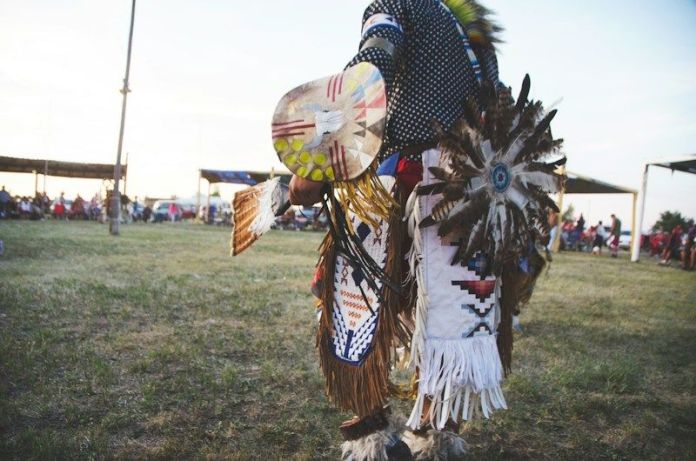
The Lucases are not Native American, and they have apparently worn out their welcome on the reservation. After Pastor Sarah condemned the Arapaho sundance as “idol worship” in a July sermon, her church has faced protests. The Northern Arapaho and Eastern Shoshone tribal councils say they want her out — even though the church was built on private land.
Pastor Sarah insists she was simply preaching the Bible and exercising her First Amendment rights in that July sermon. But the AP reports that many Arapaho were stunned to hear an outsider disparage the ceremony and discuss details that aren’t meant to be spoken of openly.
Even an Arapaho member of the church who agrees with Lucas that Native Christians should turn away from Indigenous ceremonies described the tone of the sermon as racist.
“She cares for our people,” Tearany Black told the AP. “I just don’t think she understands where we’re coming from.”
And that’s the part that gets to me.
Where’s the Love?
In the video clip in question, Lucas stands before her church and declares Native ceremonial practices to be idolatry. She tells the congregation that people had “prayed to pipes” and to their ancestors in hopes of finding freedom from addiction and healing from sickness. “Jesus is enough,” she says. “It’s not Jesus plus. It’s Jesus everything.”
Pastor Sarah says she regrets how she delivered her remarks, but not the remarks themselves.
It’s true the Bible treats any worship not directed to God as idolatry. But was it wise to speak so bluntly without showing any sensitivity to how Arapaho people understand these ceremonies, what the traditions mean to them, or how Christianity has historically been used to harm Native communities?
This whole affair is even more surprising because Lucas is not entirely unfamiliar with reservation life. In a July appearance on Andrew Wommack’s “Grace & Faith Today” show, she said her parents were ordained to minister at Wind River when she was 10 and that she lived there until she was about 16. In that same conversation, she acknowledged the history of forced assimilation embodied in the phrase “ Kill the Indian, save the man.”
So I would think she would understand why an outsider’s blatant condemnation of Native spirituality might reopen old wounds — even if that outsider sincerely believes she is preaching biblical truth. I’m left wondering, “Where’s the love?”
Evangelism and Erasure
The story got me thinking about how evangelism and ministry are supposed to work. Generally, you’re in relationship with the people you want to reach and serve, which means taking the time to understand where they’re coming from and what they value.
Rarely, I think, is the goal to immediately tear down or destroy their spiritual practices, even the ones one might call idolatry. Instead, as I’ve learned, it’s about becoming familiar with their spiritual context and asking: Where is God working here? How might God be revealed through what they already understand and embrace?
I think about the Apostle Paul in Athens ( Acts 17 ). Scripture says his heart was troubled by all the idols in the city. But he also noticed an altar dedicated to “the unknown god,” and he used it as an opening. He told the Athenians he could tell them who this God was: the Creator and Lord of the universe, who will one day judge the world through his Son, Jesus Christ. Elsewhere, Paul confronts opposing powers very forcefully. But here, though deeply distressed, he didn’t announce that everything they did was idolatry and terrible. He didn’t start smashing their altars and insulting their traditions.
That seems the smarter route when you’re on someone else’s reservation. Yes, Foundation Nation sits on private land, but it’s land within the reservation. If your purpose is to serve its people and reveal the one true God to them, wouldn’t it be better to ask God — ask the Holy Spirit — to help you perceive where Jesus might already be making himself known among them?
Considering Richard Twiss
That question led me back to Richard Twiss, the late Sicangu Lakota author and theologian. Twiss argued that Native people do not have to discard their identities, cultures, and traditions wholesale to follow Jesus.
Those who first evangelized Twiss wanted him to become a Christian, which he learned was quite different from following Jesus Christ. He rejected the idea that Indigenous languages, ceremonies, music and ways of knowing were obstacles to Christianity. Instead, he saw them as parts of a people’s God-given identity that could be refined, reclaimed, and offered to Christ.
Twiss described himself as a “syncretist” whose “core allegiance to Jesus as Creator” was enriched by traditional Lakota ceremonial beliefs and practices. He believed he could hold the exclusive claims of Christ in tension with Indigenous religious traditions without losing his faith in Jesus.
As a review of Twiss’s Rescuing the Gospel from the Cowboys explains, he envisioned Native communities themselves doing the careful, shared work of examining their practices in the light of the Gospel. White Christians could participate — but as invited guests, not as the ones in charge.
In a 2012 interview, Twiss described burning sage and dancing at powwows as forms of prayer. Every step, he said, could become a prayer for his people. His Native identity was not something he had to leave behind to approach Jesus. It shaped how he approached Jesus.
Not everyone agrees, of course. But some Native Americans say they can remain faithful to God in Jesus Christ and faithful to the places and cultures God put them in without conforming to a “White man’s” version of Christianity.
For a “a multi-cultural, multi-generational church made up of people from all different backgrounds,” I would hope this is something that Foundations for Nations, which has reportedly lost half its members, considers.
You have just read what was originally the intro I wrote for the September 19 Faithfully Magazine Newsletter, also republished at the News With Nicola Substack.



